
Opening doors to new markets: Singapore’s ties with the Pacific Alliance
DEC 17, 2025 | 5-MIN READ
Government officials will never ask you to transfer money or disclose bank log-in details over a phone call.
Call the 24/7 ScamShield Helpline at 1799 if you are unsure if something is a scam.

SEP 14, 2026 | 7-MIN READ
You hear about carbon credits everywhere now, from news headlines and company sustainability reports, to boardroom discussions about emissions.
Yet, few people understand what a carbon credit actually represents, or why Singapore has made them part of its climate strategy.
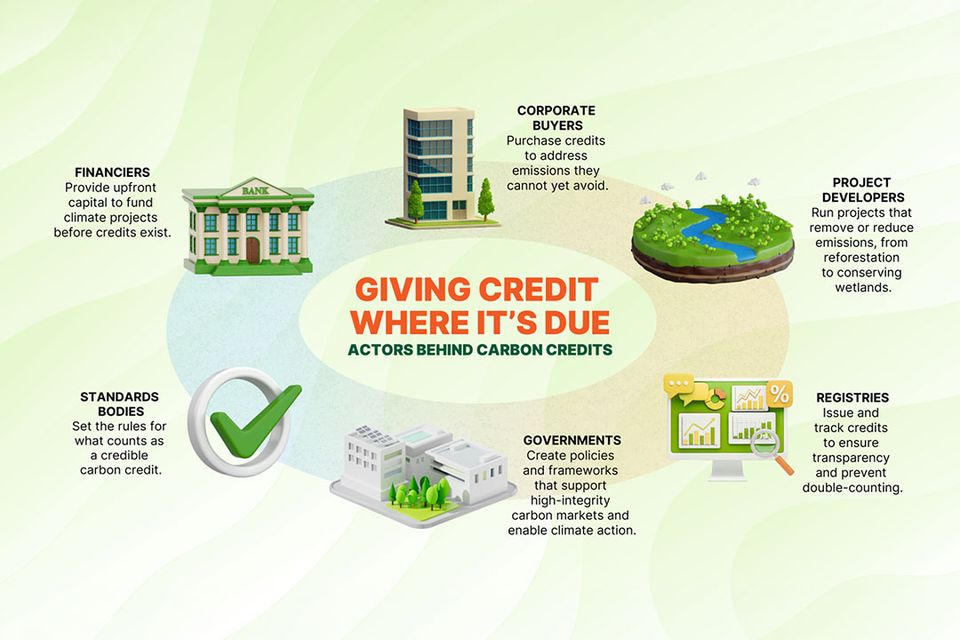
Here’s a quick explanation: carbon credits refer to carbon emissions reductions or removals, measured in tonnes of carbon dioxide equivalent (tCO2e). They are generated through climate action projects. Money used to purchase carbon credits unlocks funds for these initiatives.
Companies buy carbon credits for two reasons. Some buy them voluntarily to meet climate goals, while others do so to fulfil regulatory requirements. In Singapore, companies paying the carbon tax can use high-quality international carbon credits to offset up to 5 per cent of taxable emissions.
Countries buy them too. Under the Paris Agreement, governments can trade verified carbon credits to meet national climate targets. This matters for Singapore, an alternative-energy disadvantaged country with little land for solar, no rivers for hydropower, and not much wind.
Sounds straightforward, right? But the market has its share of detractors.
Here are three common myths about carbon credits, and how Singapore uses carbon credits as a tool for real climate impact.
There have been past controversies where companies exaggerated the environmental benefits of their carbon credits purchases, by relying on a fragmented carbon market with inconsistent standards. This is greenwashing – making a company appear more environmentally responsible than it really is.
Part of the problem was a fragmented market. Different independent crediting programmes and national frameworks used different methodologies, leaving buyers unsure of which credits to trust.
But the bar is rising. The Integrity Council for the Voluntary Carbon Market has set common benchmarks for high-quality carbon credits through its Core Carbon Principles (CCP) – covering additionality, permanence, robust quantification, and more.

Credits meeting the CCP standard give buyers greater confidence in their purchases. Singapore’s guidance points companies to these and other internationally recognised benchmarks.
Singapore has also put in place clear safeguards to ensure the environmental integrity of carbon credits used towards Singapore’s climate targets.
Only international carbon credits that meet the National Environment Agency's eligibility criteria can be used. Singapore also co-chairs the Coalition to Grow Carbon Markets with Kenya and the UK, which is committed to shared principles on high-integrity credits.
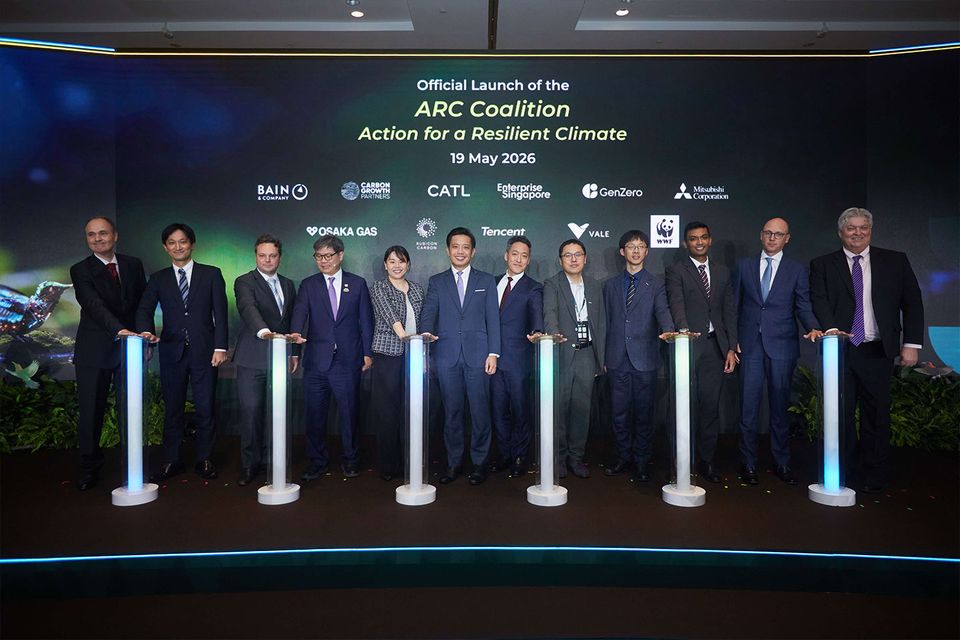
New initiatives reinforce this direction: the Singapore-based Action for a Resilient Climate Coalition (ARC Coalition) is working to align buyers around common quality benchmarks and eligibility criteria based on leading international frameworks.
By encouraging buyers to align around a common set of expectations, such initiatives can reduce fragmentation, improve market transparency, and make it easier for capital to flow to high-integrity climate projects.
The conversation has shifted to how companies should use them. The consensus: firms are expected to cut their own emissions first, with credits complementing, not substituting.
In October 2025, Singapore published a voluntary carbon market guidance document setting out how companies should use credits within a credible decarbonisation plan: measure baseline emissions, build a plan, and carry out every feasible reduction before turning to credits for what remains – particularly in hard-to-abate sectors. The 5 per cent cap under the carbon tax works on the same logic.
The same principle is reflected in the ARC Coalition, where participating organisations are expected to have credible decarbonisation plans aligned with the long-term temperature goals of the Paris Agreement, and to be actively pursuing emissions reductions within their own operations. This helps ensure that carbon credit demand is anchored in genuine decarbonisation commitments.
The data suggests this is what happens in practice.
Companies buying carbon credits are 3.4 times more likely to have an approved science-based climate target, according to Forest Trends’ Ecosystem Marketplace, and credits make up just over 2 per cent of their total emissions. Those buying credits tend to be the ones already doing the hard work.
Trees are the most visible projects, but far from the whole story.
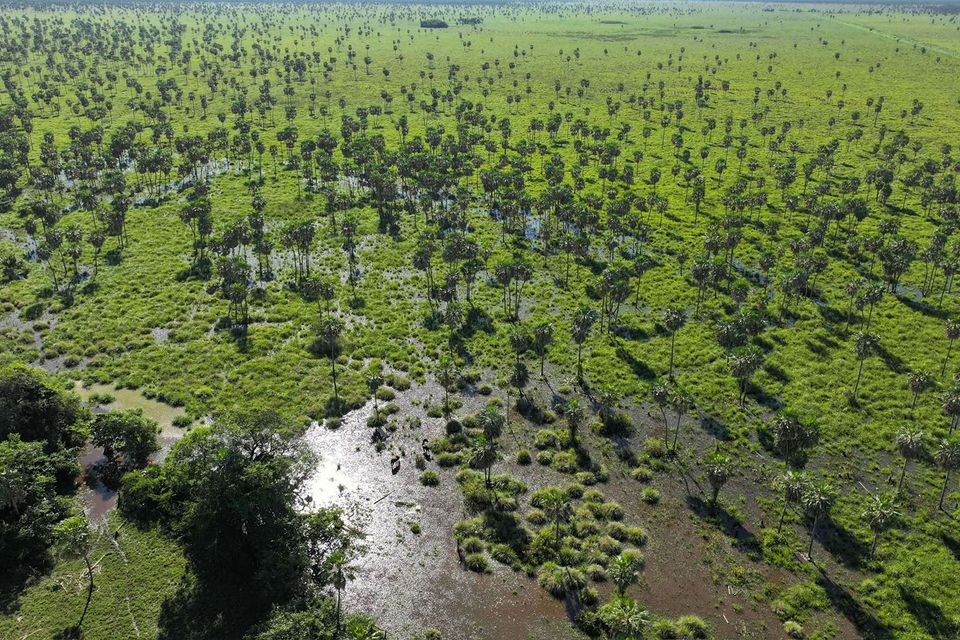
Singapore's own four projects do three different things: two projects prevent deforestation in Peru, one restores soil carbon in Paraguay's grasslands, and one reforests degraded pastureland in Ghana.
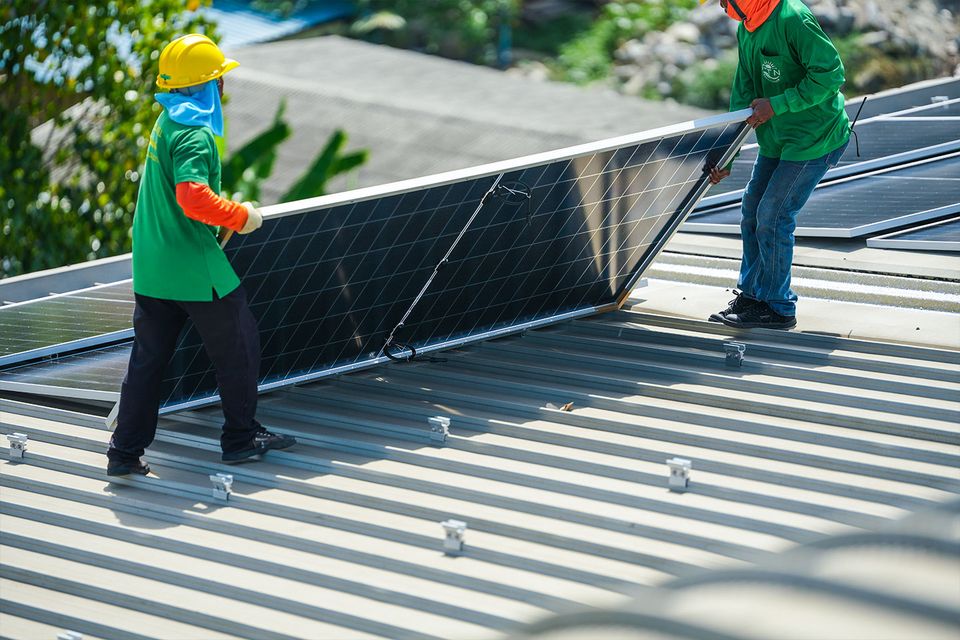
Elsewhere, credits fund clean cookstoves, renewable energy, safe water systems and technologies that capture carbon directly from the atmosphere.
Many projects also deliver wider benefits beyond reducing emissions. Under Singapore's Implementation Agreements, for example, 5 per cent of the proceeds from carbon credit transactions are earmarked for the partner country’s climate adaptation efforts.
Carbon credits are not a get-out-of-jail-free card for companies unwilling to clean up their act. They are a bridge, funding projects that would not otherwise find backers, while companies work on reducing their own emissions.
The market is still maturing. But it’s no longer the Wild West it once was, and Singapore is helping to rewrite the rules for a cleaner planet.