

Celebrating 25 years of the Economist Service
OCT 29, 2026 | 5-MIN READ
Government officials will never ask you to transfer money or disclose bank log-in details over a phone call.
Call the 24/7 ScamShield Helpline at 1799 if you are unsure if something is a scam.

NOV 25, 2026 | 7-MIN READ
The Weights and Measures Office makes sure you get what you pay for when buying things that are weighed or measured.
It’s grocery shopping day.
As you push your trolley down the supermarket aisle, you pick up a bag of frozen shrimp from the freezer. You also toss a can of tuna and a bottle of oyster sauce into your cart. And then a packet of rice too.
The shrimp is 500g, the tuna is 150g, the oyster sauce is 300ml and the packet of rice is 5kg. At least that’s what the labels say.
But who’s checking?
That would be the Weights and Measures Office (WMO), which is overseen by the Competition and Consumer Commission of Singapore (CCS), a statutory board under the Ministry of Energy, Trade and Industry (METI).
According to Singapore’s Weights and Measures Act (WMA), “net quantity declarations must reflect the actual product weight, excluding all packaging materials (e.g. plastic wrappers and labels, absorbent pads, and excess water).” In other words, if the label on a bag of frozen shrimp says 500g, that weight should refer to the shrimp itself, not the packaging or the glaze on the shrimp.
The CCS WMO conducts market surveillance across Singapore to verify these claims. It identifies a range of pre-packaged products for testing, considering factors such as feedback and reports received, as well as consumer and market trends.
Surveillance typically involves staple food items and top categories in the Consumer Price Index (CPI). These could include packet drinks, canned food, rice, oil, or even frozen poultry or seafood. Selected products are procured from supermarkets, suppliers and online platforms, and then tested by accredited third-party laboratories.
CCS WMO’s remit isn’t limited to food products. It also checks on other pre-packed consumer goods that are sold with a declared net quantity on the packaging, such as detergent, shampoo and handwash.
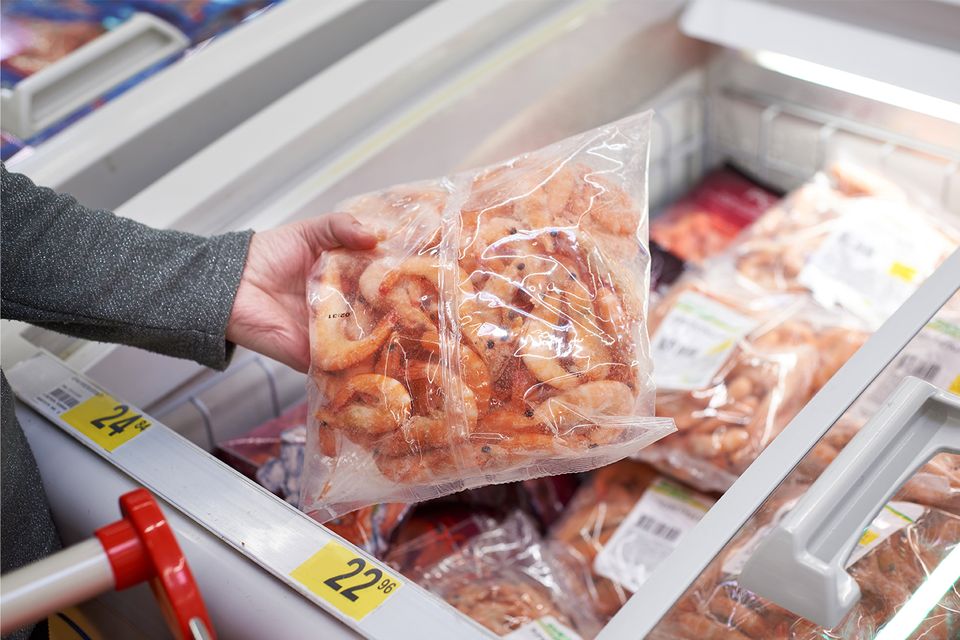
Items like frozen seafood often come with an ice glaze to preserve quality. But to comply with the WMA, the net weight on the package label should not include the weight of the ice. To verify this, CCS WMO sends packages to a lab where the seafood is rinsed, drained, and weighed on a calibrated scale.
That said, a packet of frozen shrimp labelled 500g may not weigh exactly 500g. That’s because even the best factory machines can’t possibly fill every packet to the exact same weight or volume every time.
CCS WMO sets some rules to balance the reality of these small (and permissible) weight variations against the need to make sure manufacturers don’t consistently underfill their products.
For instance, if a certain number of packages in a single batch of products are underweight, or if a single package in the batch is excessively underweight, then that batch fails the inspection.
If there are significant discrepancies, the CCS WMO engages manufacturers, suppliers or supermarkets directly, often working with them to rectify the issues.
This way, consumers don’t get short-changed.

As you continue your supermarket shopping spree, you reach the fresh produce section. You have a craving for bananas that simply must be sated, so you grab a bunch and weigh them for labelling.
The bananas weigh 300g. At least that’s what the scale in the supermarket says.
But who’s checking this?
You guessed it: CCS WMO. To make sure customers pay fair prices for items that are accurately weighed, the Office regularly verifies the weighing instruments used in supermarkets, medical halls, or even bak kwa (barbecued pork) shops.
Throughout the year, officers conduct spot checks at wet markets and physical shops islandwide, looking for a specific label on the weighing instruments used by these businesses.
This ACCURACY Label, to be exact:
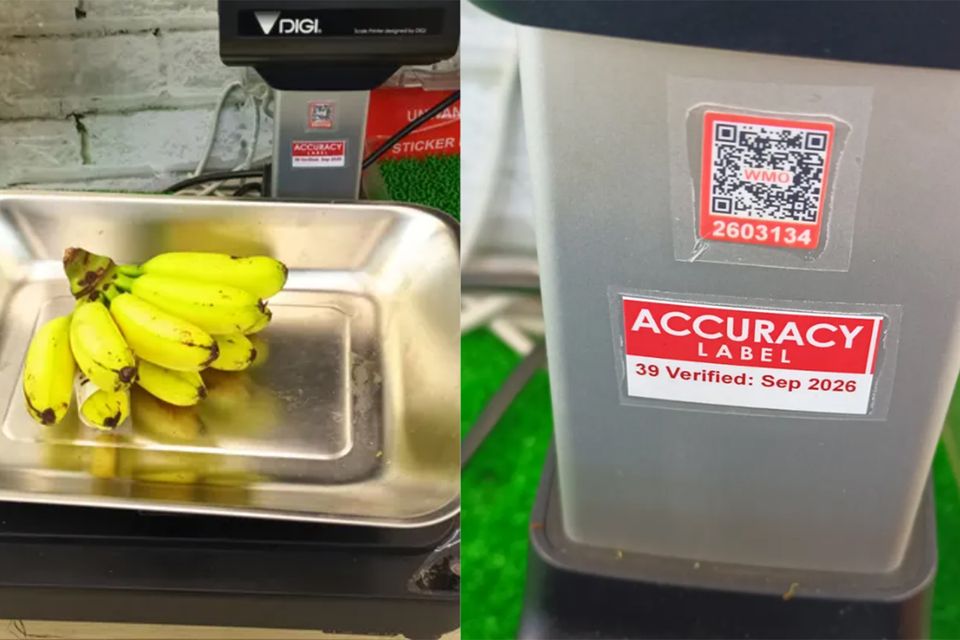
The ACCURACY Label means that the weighing or measuring instrument has been verified as accurate. The label is valid for 12 months and businesses should get their weighing instruments verified again before it expires.
Besides this label, each instrument should also have a QR code label with a unique 7-digit identification number. Consumers can either scan the QR code or search for the unique 7-digit identification number in CCS WMO’s public registry to check when it was last verified, and who the business owner or user of the instrument is.
Consumers like you can play your part. If you suspect that there’s a discrepancy in the weight or measurement of the item you’re about to buy, you can ask for the item to be reweighed or choose not to proceed with the purchase.
If you’ve already completed your purchase, first approach the seller directly to resolve the issue. If this isn’t possible, you can submit a report via CCS WMO’s feedback form.
Other issues involving measurement accuracy can also be reported via the same form.
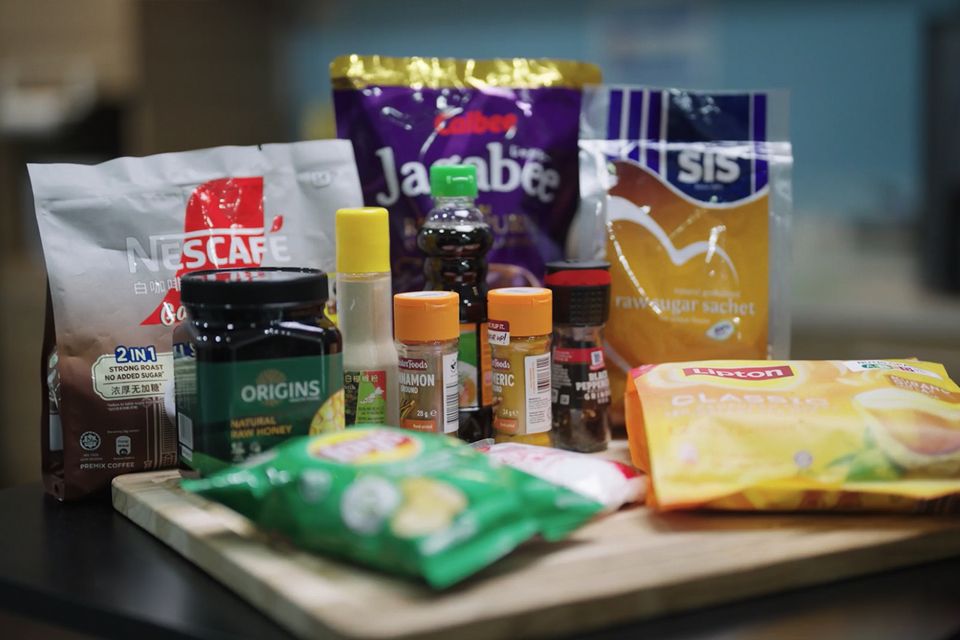
Be it for a bag of frozen seafood, a bunch of bananas, or the weighing scales themselves, a uniform and accurate system of weights and measures is an important foundation for trade. By doing the often-invisible work of verifying this system, CCS WMO provides consumers and traders with the assurance that they get what they pay for.
Overall, a pretty weighty responsibility.